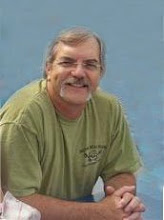
About Me


Subscribe To


 Posts
All Comments
Posts
All Comments
Favorite Pasttime

One can't describe the feeling of catching a wild West Virginia Trout with a rod you built and a fly you tied.

My Favorite Blogs


Friday, December 24, 2010
The Magic of Wood
4:17 PM | Posted by
David |


As long as I can remember I have always had a fascination with wood and woodworking. I'm sure a lot of that came from growing up across the road from my grandfather who was a well known cabinet craftsman in Southern West Virginia. The sign posted above the door to his shop read, "C. H. Akers Cabinet Shop and Saw Sharpening. Cabinets and Church Furniture". Some of the most beautiful communion tables came out of that shop.
My grandfather was known for making his own woodworking tools. Most of his shapers and profile blades he made himself out of large saw mill blades that had been sharpened just one too many times. The loggers used to pull up in front of the shop, always greeted with a handshake from this older gentleman with the snow white hair. He had fabricated a track and pulley system to load the blades from the trucks and then move them inside to a big table. He would then rig them up on a hoist and swing it to his sharpening bench. He'd take a piece of chalk and mark the first set of teeth and then begin the mastered art of sharpening the rest. He'd file the edge, then position a tool behind the teeth he had built and tap it with a special hammer, then, skip a tooth and move on to the next. When the chalk mark came back around to the top he'd reverse the saw and do all again on the skipped teeth. He'd then spray it with oil and put in a rack with the owners name on it. I have spent hours sitting on the stool beside the door watching him. My grandfather and my dad were once carpenters for the large Ritter Lumber Company at Blue Jay. So much of the hardwoods were cut for building houses and the rest for mine timbers. I have an old photograph that once hung in my grandfather's living room. It showed the lumber company stretched from one end of town to the other, with the railroad running right through it.
I was recently given a treasured opportunity to tour a lumber yard that is run by a gentleman in Pennsboro, West Virginia. I know I must have been like a kid in a candy store. Mainly because I was. They were cutting West Virginia Red Oak for flooring the day he took me through the operation. I was amazed at the whole operation and the small amount of waste from his mill. The large logs were put on a de-barker and then kicked to a conveyor that took them to the first cuts. A man sat in a small control room and watched the whole operation on a computer and sized each cut just right. The lumber then went to the band saw and was sawed again to size and then to the sorting and stacking. The bark and unusable slabs were sent to a chipper that ground it up and sent it to be used as mulch. I was fascinated after seeing what my grandfather would do at the "auto" sharpening system for the chipper blades. Across the road was the mulching center. Here the waste was cut and ground into mulch for landscaping and other uses. The owner of the saw mill was also following a family tradition. He is proud of what he does and it shows in his operation.


After doing some research I decided to build a rocking chair using the same techniques as my grandfather. I had watched him as youngster and felt that now I have the time, I wanted to try it myself. I used true West Virginia Black Walnut , along with Red Oak and Ash for the runners and pins. There was to be no nails, all joints were to be cut and pegged. From the very beginning it was a challenge to bend the Walnut for the seat back, along with the curved arm rest. But I stayed at it, keeping to the promise I made myself not to lose the integrity of age old craftsman's methods.


Wood , especially Walnut, is very expensive and if it wasn't for a family in Caldwell, Ohio, along with the owner of the mill I toured, I couldn't do the projects I have recently done. Because of them, I had the privilege of building a large entertainment center out of Wormy Chestnut taken from a barn in Boone, North Carolina, many years ago. It can try one's patience, but the results in the end are more than worth it. To Jim Edmistin and his family I thank you, so very much.


My grandfather was known for making his own woodworking tools. Most of his shapers and profile blades he made himself out of large saw mill blades that had been sharpened just one too many times. The loggers used to pull up in front of the shop, always greeted with a handshake from this older gentleman with the snow white hair. He had fabricated a track and pulley system to load the blades from the trucks and then move them inside to a big table. He would then rig them up on a hoist and swing it to his sharpening bench. He'd take a piece of chalk and mark the first set of teeth and then begin the mastered art of sharpening the rest. He'd file the edge, then position a tool behind the teeth he had built and tap it with a special hammer, then, skip a tooth and move on to the next. When the chalk mark came back around to the top he'd reverse the saw and do all again on the skipped teeth. He'd then spray it with oil and put in a rack with the owners name on it. I have spent hours sitting on the stool beside the door watching him. My grandfather and my dad were once carpenters for the large Ritter Lumber Company at Blue Jay. So much of the hardwoods were cut for building houses and the rest for mine timbers. I have an old photograph that once hung in my grandfather's living room. It showed the lumber company stretched from one end of town to the other, with the railroad running right through it.
I was recently given a treasured opportunity to tour a lumber yard that is run by a gentleman in Pennsboro, West Virginia. I know I must have been like a kid in a candy store. Mainly because I was. They were cutting West Virginia Red Oak for flooring the day he took me through the operation. I was amazed at the whole operation and the small amount of waste from his mill. The large logs were put on a de-barker and then kicked to a conveyor that took them to the first cuts. A man sat in a small control room and watched the whole operation on a computer and sized each cut just right. The lumber then went to the band saw and was sawed again to size and then to the sorting and stacking. The bark and unusable slabs were sent to a chipper that ground it up and sent it to be used as mulch. I was fascinated after seeing what my grandfather would do at the "auto" sharpening system for the chipper blades. Across the road was the mulching center. Here the waste was cut and ground into mulch for landscaping and other uses. The owner of the saw mill was also following a family tradition. He is proud of what he does and it shows in his operation.
After doing some research I decided to build a rocking chair using the same techniques as my grandfather. I had watched him as youngster and felt that now I have the time, I wanted to try it myself. I used true West Virginia Black Walnut , along with Red Oak and Ash for the runners and pins. There was to be no nails, all joints were to be cut and pegged. From the very beginning it was a challenge to bend the Walnut for the seat back, along with the curved arm rest. But I stayed at it, keeping to the promise I made myself not to lose the integrity of age old craftsman's methods.
Wood , especially Walnut, is very expensive and if it wasn't for a family in Caldwell, Ohio, along with the owner of the mill I toured, I couldn't do the projects I have recently done. Because of them, I had the privilege of building a large entertainment center out of Wormy Chestnut taken from a barn in Boone, North Carolina, many years ago. It can try one's patience, but the results in the end are more than worth it. To Jim Edmistin and his family I thank you, so very much.

Thursday, April 1, 2010
West Virginia, Almost Heaven
2:08 PM | Posted by
David |


Good luck to the mountaineers in the final four...regardless of the outcome. This state is so very proud of you.
On a pleasant, short-sleeved afternoon in Morgantown, West Virginia, under a brilliant, almost cloudless sky, a shaggy-haired, bespectacled John Denver ambled toward the 50-yard line to, in effect, christen the new 50,000-seat Mountaineer Field, home of West Virginia University's football team.
It was September 6, 1980, and the university wanted to do something special to introduce both its new stadium and a young first-year WVU coach named Don Nehlen. So Denver was invited to sing one of his signature songs - Country Roads - during the pre-game festivities.
Denver, who died in 1997, accepted the invitation apparently under the impression that he would perform a quick novelty gig...hop off his helicopter, take an escorted ride into the stadium, sing 'Country Roads' and then bail out. But that's not exactly what happened.
Denver entered the stadium and found his microphone at the center of the field, amidst the 325-member Mountaineer Band, which around him had formed an outline of the state of West Virginia . Then as he crooned the opening lyrics - 'Almost heaven, West Virginia ' - Denver was joined by about 50,000 backup singers.
Those who were there say the crowd's collective voice swelled to a climax at the conclusion: Country roads, take me home, to a place where I belong, West Virginia, Mountain Momma. Take me home, country roads ...
Those attending also say that when Denver finished his song, he gazed in all directions - perhaps dumb-founded at the reaction. Some among the crowd wept. Most just cheered for a long time.
"I'm pretty sure he had no idea what that song means to this state," said Dan Miller, an executive with the West Virginia Coal Association and an unofficial Mountaineer football historian. "I was stationed in Germany in 1971 the first time I heard 'Country Roads,' and I'm not ashamed to say that while I was listening I started crying," Miller said. "It means a lot when you come from a place that most people don't appreciate or understand. And here's someone singing about its beauty."
West Virginians, you see, feel they're underdogs almost always fighting an uphill battle. Economists tell West Virginians it's tough for their state to prosper, because the mountains are so steep and rugged that land development is a challenge. Educators used to say it was tough for many West Virginia children to get ahead, because transportation to schools was difficult and winters are harsh.
On a pleasant, short-sleeved afternoon in Morgantown, West Virginia, under a brilliant, almost cloudless sky, a shaggy-haired, bespectacled John Denver ambled toward the 50-yard line to, in effect, christen the new 50,000-seat Mountaineer Field, home of West Virginia University's football team.
It was September 6, 1980, and the university wanted to do something special to introduce both its new stadium and a young first-year WVU coach named Don Nehlen. So Denver was invited to sing one of his signature songs - Country Roads - during the pre-game festivities.
Denver, who died in 1997, accepted the invitation apparently under the impression that he would perform a quick novelty gig...hop off his helicopter, take an escorted ride into the stadium, sing 'Country Roads' and then bail out. But that's not exactly what happened.
Denver entered the stadium and found his microphone at the center of the field, amidst the 325-member Mountaineer Band, which around him had formed an outline of the state of West Virginia . Then as he crooned the opening lyrics - 'Almost heaven, West Virginia ' - Denver was joined by about 50,000 backup singers.
Those who were there say the crowd's collective voice swelled to a climax at the conclusion: Country roads, take me home, to a place where I belong, West Virginia, Mountain Momma. Take me home, country roads ...
Those attending also say that when Denver finished his song, he gazed in all directions - perhaps dumb-founded at the reaction. Some among the crowd wept. Most just cheered for a long time.
"I'm pretty sure he had no idea what that song means to this state," said Dan Miller, an executive with the West Virginia Coal Association and an unofficial Mountaineer football historian. "I was stationed in Germany in 1971 the first time I heard 'Country Roads,' and I'm not ashamed to say that while I was listening I started crying," Miller said. "It means a lot when you come from a place that most people don't appreciate or understand. And here's someone singing about its beauty."
West Virginians, you see, feel they're underdogs almost always fighting an uphill battle. Economists tell West Virginians it's tough for their state to prosper, because the mountains are so steep and rugged that land development is a challenge. Educators used to say it was tough for many West Virginia children to get ahead, because transportation to schools was difficult and winters are harsh.
In the sports realm, there annually aren't many young top-tier athletes in the state, in part because most schools are small and competition is not as daunting as in denser population areas.
There are, of course, exceptions -many of them. Native West Virginia athletes include:
Jerry West (basketball), John Kruk (baseball) and Mary Lou Retton (gymnastics) .
Author Pearl Buck was a West Virginian; so was Tuskegee Institute founder Booker T. Washington. Charles Yeager was one of the finest pilots ever.
Nobel Prize winning mathematician John Nash was from West Virginia .
So is country singer Brad Paisley. Actor Don Knotts was from the Mountain State, as is actress Jennifer Garner, who still speaks fondly of the 'hillers' and 'creekers' from her alma mater, George Washington High School in Charleston.
Most have spoken of both loving life, and overcoming tough times, in West Virginia as have a lot more well known/popular/famous West Virginians.
So, when Denver sang about Blue Ridge Mountains and the Shenandoah River, it doesn't matter to most West Virginians that the Blue Ridge is primarily a Virginia-North Carolina strand and the Shenandoah runs only a few miles through their state's Eastern Panhandle. To people who have lived their lives fighting uphill battles, hearing someone tell them their home is 'almost heaven' was more than music to their ears.
Jerry West (basketball), John Kruk (baseball) and Mary Lou Retton (gymnastics) .
Author Pearl Buck was a West Virginian; so was Tuskegee Institute founder Booker T. Washington. Charles Yeager was one of the finest pilots ever.
Nobel Prize winning mathematician John Nash was from West Virginia .
So is country singer Brad Paisley. Actor Don Knotts was from the Mountain State, as is actress Jennifer Garner, who still speaks fondly of the 'hillers' and 'creekers' from her alma mater, George Washington High School in Charleston.
Most have spoken of both loving life, and overcoming tough times, in West Virginia as have a lot more well known/popular/famous West Virginians.
So, when Denver sang about Blue Ridge Mountains and the Shenandoah River, it doesn't matter to most West Virginians that the Blue Ridge is primarily a Virginia-North Carolina strand and the Shenandoah runs only a few miles through their state's Eastern Panhandle. To people who have lived their lives fighting uphill battles, hearing someone tell them their home is 'almost heaven' was more than music to their ears.
"'Take Me Home, Country Roads:' Last but not least, what I consider to be the top tradition in the Big East. At every home game, the crowd sings this John Denver song. Denver helped dedicate Mountaineer Field in 1980, and the song has been a game-day staple since. When the song reaches the chorus and the entire place is silent except for the fans singing along -- and putting extra emphasis on the "West Virginia" part -- well, you'd almost have to not be human (or an opposing fan) to avoid getting goosebumps."
- Brian Bennett ESPN
Sunday, February 28, 2010
Out and about...
12:21 PM | Posted by
David |
Once scattered across this wonderful country of ours, were those small hometowns that offered all anyone could want. Quite often these were centered around the county seat or areas that pulled from the outlying country side. So many movies and books have used them as the main character or in art work as the main theme. These gems of society were scattered up and down both coasts and through out the midwest. Most social and civic activities centered around these towns. Stores offered just about anything one would need in their daily lives. Churches often worked as an expoxy to hold them together and Sunday mornings were hearlded in with chimes and church bells. There was usually the hardware stores and post offices that served as a gathering spot for the locals to catch up on all the local news and happenings. One could walk down the sidewalks and be in a constant nod to those they knew or were met with a greeting and exchange of well wishes. The barber usually knew you by your first name as well as your children's. The butcher knew exactly how you wanted your meat cut and often pitched in a scrap bone for your pet without asking. The world had few problems that couldn't be solved while a plug of tobacco was shared, offered on the edge of a pocket knife blade.


I have always had a fasination with such places. Often in my travels when I pass such a place, I let my mind wander back to what it was at one time. I was trout fishing in a southern community in the southern part of West Virginia and stopped for a cup of coffee. I walked over to a wall that lined the sidewalk and began to take in the view of what was once a bustling home town to so many and a center point of the lives to hundreds of miners and their families.
The store fronts were boarded or the windows were painted over. Still remaining, was the evidence of where a sign had been. Signs for hardware or .5 and dimes. Signs of a closed out grocery with the shelves still holding the fort of once such an important place. It was as though the contrast from weathering on the walls was a memorial to these once thriving ventures.
There were also signs of the time and a gradual change that has robbed us of these treasured places. As a youngster, I'd walk by or in places like Rake's Hardware, Lilly Hardware, or the Keystone service station, and always find a group of men seeing who could top the other's story. Once the mail was up at the local post office, you'd always find someone there that could bring you up to speed on who was doing what, who was ill, who had passed or simply asking how your family was. The building of interstates and byways slowly put these places to rest and out of business.
I have always played a game when I travel, especially trout fishing. I try to find the best of certain foods that would warrent me to come back. The Archwood has it covered from top to bottom. The hamburgers are a thing of the past. They are two handed delights that can fill anyone's appetite. The Big Jun breakfast leaves nothing uncovered, and each one I have enjoyed was prepared just like the first. Your coffee cup or drink is never empty. There is never a feeling of being hurried out the door. You'll always find a couple copies of the local newspaper on the counter and a desert list that can satisfy any sweet tooth. The eatery is clean and comfortable and always so very friendly. It fasinates me to sit and watch others come in and greet each other. The conversation in genuine and friendly. When the waitress comes by to refill your drink and asks how your meal was, you get the feeling they really care. I love sitting in a booth and watching out the window at a world as it is, wondering what it was once like. When you cross the street or walk to where you are parked. so often a passer by will wave even if they don't know you. If one is ever in the area, I so strongly urge them to seek it out and stop by. You won't be sorry.


I have always had a fasination with such places. Often in my travels when I pass such a place, I let my mind wander back to what it was at one time. I was trout fishing in a southern community in the southern part of West Virginia and stopped for a cup of coffee. I walked over to a wall that lined the sidewalk and began to take in the view of what was once a bustling home town to so many and a center point of the lives to hundreds of miners and their families.
The store fronts were boarded or the windows were painted over. Still remaining, was the evidence of where a sign had been. Signs for hardware or .5 and dimes. Signs of a closed out grocery with the shelves still holding the fort of once such an important place. It was as though the contrast from weathering on the walls was a memorial to these once thriving ventures.
There were also signs of the time and a gradual change that has robbed us of these treasured places. As a youngster, I'd walk by or in places like Rake's Hardware, Lilly Hardware, or the Keystone service station, and always find a group of men seeing who could top the other's story. Once the mail was up at the local post office, you'd always find someone there that could bring you up to speed on who was doing what, who was ill, who had passed or simply asking how your family was. The building of interstates and byways slowly put these places to rest and out of business.
Gone are the days of using a community as a social network instead of an internet site. The remains of these are often seen from a distance or an exit along a hurried life. Large shopping centers and malls replace those places that hold to my imagination so strongly. Local goverment is so often in large, cold and unfriendly glass buildings. Strangers that begged for your vote now have no clue who you are or your name. Often so many of these that were once dreams by a small business man are torn down for parking or to make way for cookie cutter homes and "super stores".
These places I call Americana, or Hometown USA, are something my kids will never really know. My grandchildren could possibly in time only read about them. Probably online because those local newspapers are dying by the day. This is why I'm adding a feature to my blog called Out and About. It's about these places I have found and made a point to enjoy. It's places I invite anyone that reads about them to visit, and for a brief moment, vist yesteryear.
One such place is a small community north of Parkersburg called Caldwell, Ohio. Caldwell is the county seat of Noble county and once saw the boom of timber, oil and coal. It's a beautiful area with rolling hills and farm land just off interestate 77 before one gets to Cambridge. Along Main street and across from the court house is a place that, to me, symbolizes small town structure and a hold out from days long gone. It's called the Archwood Restaurant. It sits on the corner, and one might miss it if they were not looking for it. Once you step inside, you soon find yourself in the midst of a true delight. There has always been a friendly greeting as you walk to your booth or table. It doesn't take long to notice that the conversation is among those that know each other.
I have always played a game when I travel, especially trout fishing. I try to find the best of certain foods that would warrent me to come back. The Archwood has it covered from top to bottom. The hamburgers are a thing of the past. They are two handed delights that can fill anyone's appetite. The Big Jun breakfast leaves nothing uncovered, and each one I have enjoyed was prepared just like the first. Your coffee cup or drink is never empty. There is never a feeling of being hurried out the door. You'll always find a couple copies of the local newspaper on the counter and a desert list that can satisfy any sweet tooth. The eatery is clean and comfortable and always so very friendly. It fasinates me to sit and watch others come in and greet each other. The conversation in genuine and friendly. When the waitress comes by to refill your drink and asks how your meal was, you get the feeling they really care. I love sitting in a booth and watching out the window at a world as it is, wondering what it was once like. When you cross the street or walk to where you are parked. so often a passer by will wave even if they don't know you. If one is ever in the area, I so strongly urge them to seek it out and stop by. You won't be sorry.
Sunday, December 20, 2009
Snow storm in December...
5:17 AM | Posted by
David |
 The National Weather Service had been predicting a winter storm to move into West Virginia all week. I never understand why so many seem to never take those matters seriously. They were right and starting after dark Friday night the 18th, the rain turned to snow. It's beautiful here on the river when it snows like this. The pines and bamboo soon cover and create a beautiful color contrast of green and white. It's especially nice when it happens this close to Christmas.
 There was little to do other than watch it fall and build. I made sure the squirrels and birds had plenty to eat right outside my dining area windows so I could watch them. Once again, I have created a monster I have named Fatso. He has to be the biggest squirrel I have ever seen. It's nothing unusual for him to plop down on his behind with his tummy hanging over the edge of his feet and devour a whole ear of corn in one sitting. How dare any of the others come near it. He's instantly in a rage and chases them off. They tend to only get the crumbs when he heads back to his nest in the big Maple tree on the river bank, for a nap I'm sure. He's getting so fat that he no longer makes the journey from his nest to the deck via the tree limbs. He simply can't make the jumps any longer.
The snow storm hit as predicted and the southern part of the state has been under siege since Saturday morning. Snow levels coming in from all over the state has some places seeing as much as 30 inches. The turnpike was closed and travelers stranded along the famous toll road for as much as 20 hours.
As I sat at the table watching the circus on my deck, I started to think about a time I too was like so many of those traveling this weekend. I was stationed in Cheyenne, Wyoming, at Francis E Warren AFB. I was granted a leave over Christmas and decided to make the journey back to West Virginia so my wife and I could be with family. One of the men in my photo unit lived in Baltimore and was having a problem getting flight connections home. He offered to help on gas if he could ride as far as Columbus, Ohio. We left Cheyenne in the afternoon and headed east. Conversation flowed and the miles flew by with ease. I made the trip from Cheyenne to Parkersburg in 24 hours. We stopped for gas and eats and that was it. Actually it was a good trip considering the distance.
New Years day my passenger flew into Parkersburg and off we went on what we hoped was to be an uneventful trip back to Wyoming. It was uneventfull until I got to Iowa. Late that night, it started to snow and blow. Temperatures dropped like a rock and driving at times was miserable to say the least. Close to daylight, I stopped at an exit in Ashland, Nebraska, for breakfast and gas.
When I went to leave, I couldn't move forward or backward. The guy who was riding with me had grown a long handlebar mustache while on leave. With my wife behind the wheel, and he and I pushing, we finally got the car moving again. In the process, his mustache froze and when he went to wipe the frost off, it broke . We moved to a Phillips 66 station across the road. We never moved again for two days. The owner told us we could park under the canopy of a drive-in that was closed for the season. It didn't take long for the service station to fill up with others. Soon the word came the interstate was closed and we were stranded there. It was known as the New Years Day Blizzard of 1971. Thousands were stranded along the interstate and had to be rescued by the National Guard. The chill factor at times was -40 below zero and snow accumulations well over 3 feet in areas. The open country of the Nebraska plains was perfect for drifting snow at times well over 6 feet. We slept where we could, along with others. The owner of the service station went out of his way to make us as comfortable as we could possibly be in a situation such as that. When the road finally opened, it was one lane east bound and one lane west bound. The snow was piled so high, you couldn't see the other side of the highway. It took us a day and a half to make it back to Cheyenne. It's most definitely something I'll never forget.
As I sat this morning and watched the snow falling, I heard the news stories of all that are stranded and remembered a time I too knew that helpless feeling. It's so peaceful to look out and see a blanket of snow, the limbs all covered, and that strange silence that comes with it all. There's something about all of this that gives coffee a totally different flavor and effect. The fire in the fireplace seems warmer and more welcoming, and definitely a new meaning to "a long winter's nap".
Thursday, December 10, 2009
Tis the season once again
6:32 PM | Posted by
David |
 Winter paid the river a visit today. The air temp was just above 22 degrees with snow flurries all day. The winter sky I'm so familiar with was predominate for sure. It was a good day to build a nice fire, make a pot of coffee and simply relax. Most of my woodworking projects for Christmas are done and I wanted to take advantage of a day like this.
 38 years ago today my daughter was born. Oh, how I so well remember that day. I was stationed at Shaw AFB in Sumter, SC. It was a long labor, and the nurse had sent me home, telling me there was nothing I could do and to get out of her way. I had just gotten ready to sit down and relax a few minutes when the phone ran. I was summoned to the hospital. I hurried to get ready and when I opened the door I had two surprises waiting on me. One was a fog so thick you couldn't even see the car. The other was our Santee Pointer named Trixie took out after a possum that was in the yard. Not what I needed. I finally got the dog back in and then faced the trip to the base. The fog was so thick I used a flashlight with the door open to follow the berm of the road.
That night I was given one of the greatest gifts a man can receive. I have been so proud of her since that very first moment. Nothing has changed. She is a beautiful mother in her own right, now with a doll baby of a granddaughter. Just as all three are to me.
As I went from one small project to the other today, I put my Christmas CD's on. I'm sure everyone has their favorites from the old standards of years gone by to even some of the new modern versions. A couple of years ago I came across a Christmas special on PBS. It was called a Christmas from Dublin. The group is four ladies by the name of the "Celtic Women". I honestly think that their voices are what angels will sound like. I'm partial to Celtic music anyway and this just captured my mind and heart. But one of my all time favorites is John Denver and the Muppets Christmas Together Album. If you should get the chance to either pick the album up or view some of the cuts on Youtube, it's more than worth it.
There's just something about a cold December day, with the way the sun sets at dusk that brings so many thoughts to my mind. I was thinking today how rich I am as a man. For I have seen that special look in my children's eyes on Christmas morning. It's just something one can't put a price on and I will never forget.
Saturday, December 5, 2009
It will change. To me, it's the same...it's home.
8:41 AM | Posted by
David |
 Not far from the county seat of Raleigh County is a small burg called Beaver. Founded in the the early 1800's by the two Prince brothers, it has gone by other names. First, Oxley and then Glen Hedricks. Beaver lies along two creeks, Beaver and Little Beaver. They join near the center of town at what was once Todd's Hardware. Beaver centered around the Ritter Lumber company where both my father and grandfather were carpenters. Ritter timbered the the local water sheds along with the areas along the Piney. The railroad ran through the community, crossing the creek at Glen Morgan and running through Blue Jay to the C&O dam. From there, on to the southern coal fields.
 Several mines were active in the area. Raleigh Number 7 was behind my house on the ridge and Pimmerton along the Table Rock ridge area. The landscape was scattered with various strip mine ventures from time to time. Beaver had it's own movie theater where my brother Andy was the projectionist at one time. Twenty five cent matinees were in easy reach of most of us, often obtained from soft drink bottle returns. Beaver had its own grade school, which my whole family attended and fed the population of Shady Spring High School. I was the last attending class of the old high school and first graduation class of the new in 1967.
A lot of the locals worked for the railroad or in the mines. I can still see in my mind the miners walking up the road with their hard hats and blackened faces, contrasted by the round, shiny dinner buckets they carried. These men held my respect then and still do. Often they would walk in the yard and stop and talk to my parents about what was going on in the area, or how their garden was doing. It was nothing uncommon for them to leave with a hand full of fresh tomatoes or a bag of green beans.
I spent my younger days fishing Beaver Creek every chance I'd get. I knew every rock, and every hole from the airport road to the Beaver Block company. I'd ride my bike to the old site of the Blue Jay lumber company and fish all the spots that held such a secret then.
My grandfather had a cabinet shop in Beaver. To most, he was known as Uncle Charley. I used to watch with amazement at his craftsmanship and the monstrous saw blades men would bring to him to be sharpened. I can still see him walking from the shop to the house at dinner time, brushing off the saw dust and his so well known cough. I never knew my grandfather to not wear his fedora hat when he worked. So often I'd venture to his shop, and he'd hand me a hand full of nails and small hammer and scrap piece of wood..."Drive 'em straight, David".

Beaver had it's grocery stores and markets. Southern produce was always fresh at Ransom's market. I'd walk in with a list my mother had given me and knew I was going to be greeted by the owner as "Little Ray"...I only knew his name as Chawback and he had grown up in Beaver with my father. He never failed to look at me and tell me that as long as I lived my dad would never die. At the time I didn't really know what he meant, but it referred to looking so much like my father.
Beaver at one time was a tight community. There was one church that the Baptist and Methodist shared on odd and even Sundays. My grandfather was an elder in the Baptist church and I still have a photo where he and other men from Beaver were burning a bank note that was paid off for the new Beaver Baptist Church. Southern WV culture was very strong then and the men and deacons sat on the same Pew. My father was a Sunday School teacher and so well liked by all of those in his class. Many years after his passing I have had those that attended his class tell me how much he meant to them. So many of the coal camp homes in Beaver were built by my father as well as those in the Beckley area.
When I got older, I began to venture out to areas new to me as young pup. I began to hunt the ridges and mountain tops around Beaver. I had a spot a good hike from my house that had a large rock outcropping. The rocks were on a steep bank right at the top. Far below ran Piney Creek on it's way to New River and the railroad. I could sit on these rocks and it would put me right up among the Hickory tree tops below. Hidden against them, I was in a perfect place to squirrel hunt. I have spent so many fall days sitting on these rocks and counting the coal cars as they made their way from Raleigh to Prince. I'd buy my shells usually 5 or 6 at a time at Lilly's Hardware. I learned at a very early age not to waste a shot. Often on the hike I'd kick up a rabbit or a grouse. Like a cat with a captured mouse I was so proud to show them to my mother when I got home. Little did I know, it was a coming of age ritual I was experiencing. It was at that time I formed a love for autumn in West Virginia. Every color you can imagine would line these ridges and hollows.
One Saturday morning, I took the hike to the ridge to hunt. I could hear the noise well before I got to where I was going. I came to the ridge where the rocks were and I was, all of sudden, lost. The hickory grove and Red Oak were gone. Instead, it was bulldozers and cutting machines getting ready for a strip mine. A man approached me and asked me my name. I told him and he asked if Ray Akers was my father. He proceeded to tell me I couldn't hunt there anymore. They were taking timber to get ready for the mine. Funny how certain things, after all this time, stays with you. He told me his name was John Plumbly and to tell my dad he said hello. I told my father that afternoon about the meeting. He went on to tell me what a good man John was. To me, I hated him for cutting down my trees. After all they were mine...I didn't care who owned them. They were mine.
The summer I turned 14, my mother approached me one afternoon while I was painting the steps to my grandfather's house. She had been to the store, and Henry Lilly asked if I would be interested in a job. I went to talk to Henry and he told me he needed a stock boy and someone to help around the store. Little did I know I was starting, basically, a full time job. My hunting and fishing time was no longer, except on Sunday afternoon after church. I soon made friends with the older men that worked for Henry. It didn't take long to be part of my life, other than school. Once I got my drivers license, my job was delivery and seeing a part of Raleigh County and it's culture I didn't know.
Beaver was more than just a place in my mind. It was also the hometown of my friends. Kids I started first grade with. Kids that soon became as much like family as anything else. These were kids like Bobby and Jody, who I shared so much with and thought the world of. Boys you played ball with and felt when growing up there would be no separation. Unfortunately, it doesn't work that way. There were families you soon learned to care about and admire. These were the people that waved and always stopped to asked how you were doing, or how your parents were. These were families and children with a mountain and southern West Virginia heritage, a common matter we all shared.
Beaver was a town where on a cool evening you could sit on the pipe fence rail at Ruth Evans' house and just watch the cars go by. Never a fear of trouble and problems from others. Beaver was a town where a walk to the Kook Kup was an adventure and always ending with one of Cora's cool treats. Beaver was an all-American town where on the fourth of July, you could hear the bootleg firecrackers and bottle rockets going off. Flags draped the front porches and picnics everywhere. Nestled in this valley between two ridges, it looked like a post card from New England with the church steeples and the creek flowing through. I'm sure there are those that lived there that didn't see if through my eyes...or my mind. I'm sure there are those that couldn't wait to leave and never returned. Perhaps I took the time to see it as it was. On a visit to my mothers in the late 70's I drove up the top of the ridge behind her house. I stopped and walked out into the field where I could look down on Beaver. It had changed. It had grown. The vacant field now had a Kroger's and the airport road was now an exit off I-64. Fast food was there where at one time only Cora's Kook Kup offered a hot dog. I could see from the old High School to the bend at Glen Morgan. It had changed...but I still could see the houses where my friends lived. I could see where I went to church and where a summer's afternoon you'd find me fishing.
I could see the grocery store where I worked, and I could see the house where I was raised. It looked different. But it was still the same...it was my home.
Friday, October 2, 2009
It's a West Virginia Mountaineers...thing of the heart
5:12 PM | Posted by
David |
 As I rode out Route 50 heading to Morgantown, I began to take note that the trees were starting to show color and the famous fall vista along Rt 50 was coming to life. One car after the other would pass with their WV decals or flags flapping from the motion. We all had one thing in common. We were going to see the West Virginia Mountaineers play football.
 I have never really been a sports fan. I follow them at times more so out of curiosity than anything else. But Mountaineer Football is something entirely different. Perhaps the same emotion that thousands in this state feel but can't explain.
Fall was showing it's face in Morgantown . The temperature was 50 degrees with a clear sky and an almost full moon. It was a sea of gold once you got to the stadium area and an excitement and spirit was filling the air. The smell of grills and traditional foods teased your nose. Thousands of fans in full pregame party caused that familiar rush I love so well.

As I sat in the stands during the pregame, the voice of legendary Jack Flemming came to my mind as if a ghost was sitting in the seat next to me. It was as if I could hear him saying, "Autumn in Morgantown, West Virginia, home of West Virginia University is here. It's a cool fall night, the perfect canvas for football as the West Virginia Mountaineers take the field"... No one could commentate the Mountaineers like Jack could.
As I sat there watching the warm ups, my mind drifted back to 1967 and being in Parkersburg going to school. A friend of mine from Beaver was in his second year in Morgantown and called to invite me up for the weekend and a WVU football game. The only exposure to such a thing was on TV and even that was rare. I jumped at the chance. He drove from Morgantown and spent the night Friday night and we took off to Morgantown via Rt 50 which at that time was mostly two lanes still. Fall was in full force and it's effect on me added to the excitement of this weekend.
Once in Morgantown, I couldn't believe what I was seeing. I guess I had been sheltered too much for such things. Everything from sheets of plywood to bed sheets were hanging from the dorms with the phrase..."beat the hell out of Pitt". I couldn't believe such things being exposed in public. But I soon learned it was the norm. I was introduced around the dorm and was captured by the atmosphere I was becoming a part of. Fraternity rush was in full swing and all the tradition that goes with it. The long bath robes, Darby caps and walking canes, each representing a frat rush of some sort. The old stadium beside the river was a perfect back drop for an event I'll never forget. That night, I added to the strings that pull at my heart. That night, I became a WVU football fan that bled blue and gold.

It was a beautiful October Saturday afternoon and I had been to Beaver to visit my mother. I was on my way back down the turnpike not far from the tunnel. (Yes, I do still remember where I was at). I had tuned in the WVU and Pitt football game and it wasn't the dangerous toll road that was causing my knuckles to be white. The score was tied in the last quarter and WVU had taken possession of the ball with 4 seconds on a stopped clock. The field goal team was put, and I can today still hear Jack Flemming giving such an excited detail. He was all but screaming in the microphone..."it's long enough...IT'S GOOD...the game is over and it's a mob scene on the field". I probably scared my wife and kids to no end. My eyes were so blurred I had a difficult time seeing.

Nothing has changed since that first trip to Morgantown in 1967. Perhaps only the emotions grew more. It doesn't matter to me the season stats or the gossip or the turmoil that surrounds any major college football team. To me, it's the Mountaineers...for I am true blue and gold and always will be.
Over the past few years I have read several accounts of WVU inviting the late John Denver to the new stadium to sing "Country Roads". The bottom line of each article you might read is that he was awe struck, not expecting to have 50,000 back up singers. At the end of the game I glanced over to my 3 year old granddaughter sitting on her father's shoulders. She knew every word to the song..."Almost Heaven, West Virginia"...once again my eyes were blurred.
Subscribe to:
Posts (Atom)


